

A presentation at the Aww-Struck: Creative and Critical Approaches to Cuteness online seminar sponsored by the University of Birmingham and University of London, May 21, 2021
Abstract:
Sei Shōnagon (966-1017), the noted poet and noblewoman in the court of Empress Teishi who wrote The Pillow Book, includes in this canonical work a “List of Cute Things.” Though this passage is frequently mentioned in scholarship on kawaii, it is seldom analyzed and never treated as an expression of the author’s poetics. Yet taken item by item this list provides a veritable blueprint of the kawaii aesthetic that holds true to this day. This paper offers a close analysis of Sei’s list to reveal how this brilliant poet constructed the first articulation of the poetics of kawaii.
Related posts
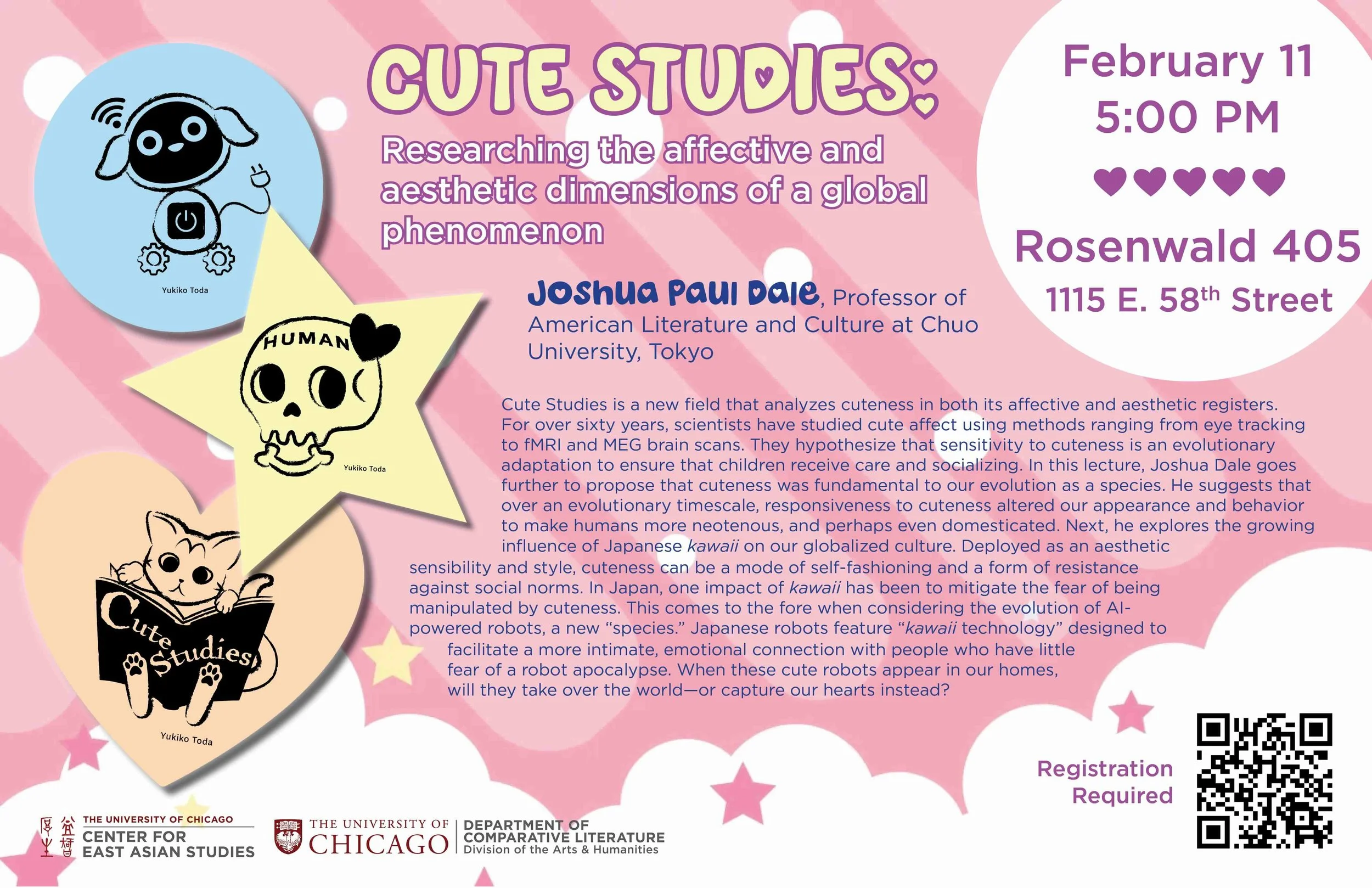
Lecture on Cute Studies at the University of Chicago.

I was a consultant for the CUTE exhibition at Somerset House in London. I also wrote an essay for the catalogue called: “The Irresistible Rise of Cuteness” (pp. 8-19).

Joshua Paul Dale, the author of Irresistible: How Cuteness Wired our Brains and Conquered the World, spoke to the CBC about why the Hello Kitty mascot endures half a century after it first came out in Japan.

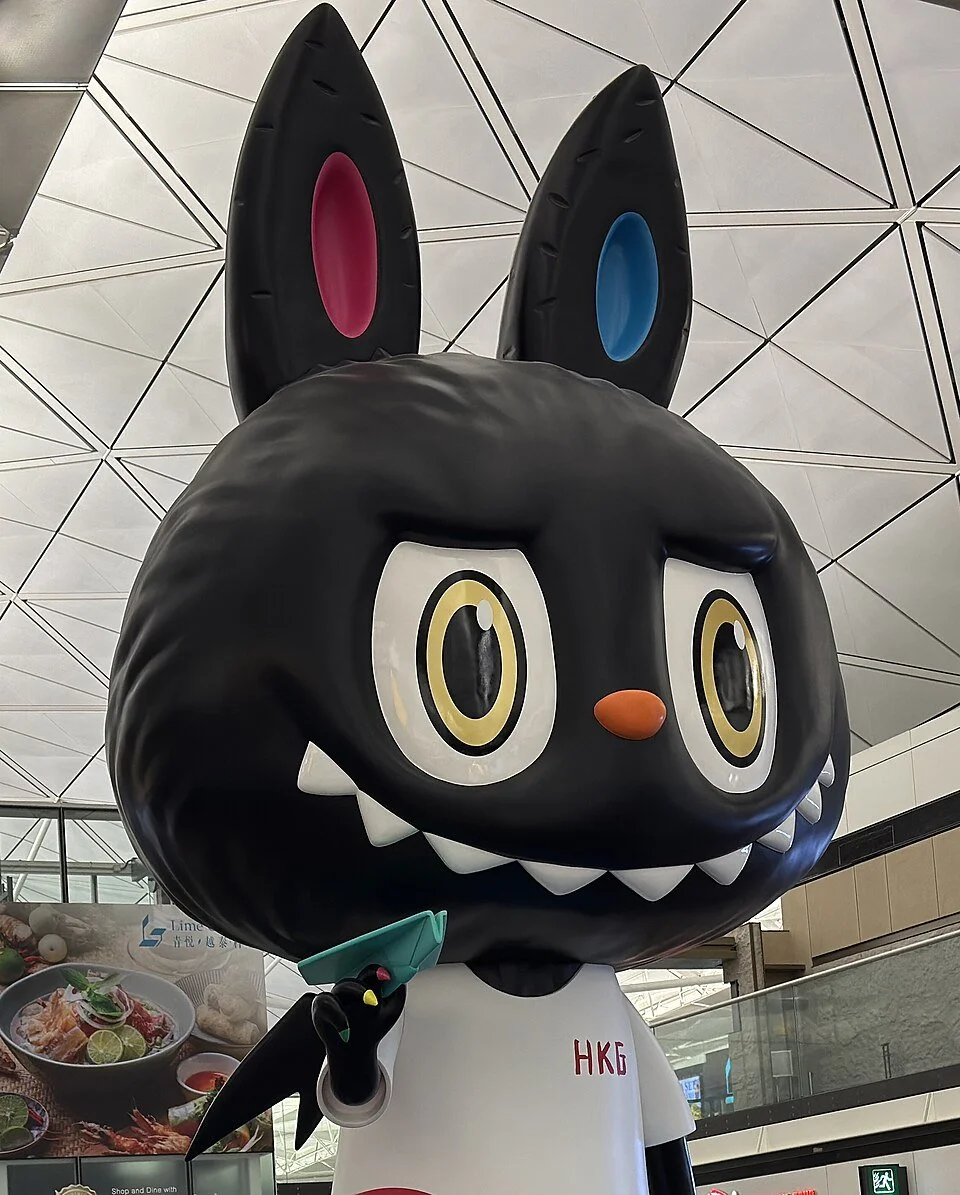
It all started with a photograph of Lisa from mega K-pop girl band Blackpink, carrying a bag with an “ugly” doll accessory strapped to her bag. The demand for Labubu exploded to epic proportions thereafter and the craze has led to thousands of dollars spent – and sometimes lost through scams. Labubu isn’t the first (remember Hello Kitty?) and it certainly won’t be the last. So why is it that “cute” sells so well? Andrea Heng and Hairianto Diman speak to Dr Joshua Paul Dale, Professor, Department of British and American Literature Culture, Chuo University, to find out more.

This is an op-ed I wrote for The Japan Times.